
The Budget 2017 confirmed a number of changes for the new 2017/2018 tax year, which we have detailed below.

Personal Tax
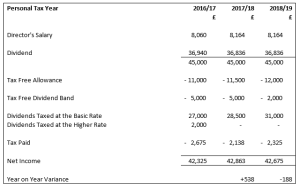
The personal tax free allowance will increase from £11,000 to £11,500 from 6 April 2017. The higher rate income tax threshold will increase from £43,000 to £45,000, meaning you can earn more before paying higher rate tax. Class 2 and Class 4 National Insurance Contributions are paid by self-employed individuals (this means sole traders, not directors/shareholders of limited companies). It was previously announced that Class 2 National Insurance Contributions will be abolished from April 2018. In the Budget 2017 Hammond announced that Class 4 National Insurance Contributions will increase from 9% to 10% in April 2018 and 11% in April 2019, however on 15th March it was announced that the Government had decided to scrap these plans for Class 4 National Insurance Contributions. There was a hit to the tax free dividend allowance which will reduce from £5,000 to £2,000 in April 2018. An illustration of a director shareholder that takes a director’s salary up to the primary threshold and the remainder of the basic rate band for income tax as dividends is set out below to demonstrate the changes.
Pensions and Savings
The lifetime ISA will come in this April which allows younger adults to save £4,000 each year and receive a bonus of up to £1,000 a year on these contributions, which can be withdrawn tax-free to put towards a first home or when they turn 60. The present ISA savings limit will rise to £20,000 from April 2017. The Budget confirms the rate on the NS&I Investment Bond announced at Autumn Statement 2016 will offer a rate of 2.2% over a term of 3 years and will be available for 12 months from April 2017. The Bond will be open to everyone aged 16 and over, subject to a minimum investment limit of £100 and a maximum investment limit of £3,000.Business Tax
Hammond confirmed that corporation tax rate will be cut to 19% from April 2017 and then cut again to 17% in April 2020. To support UK investment, the government will make administrative changes to the Research and Development Expenditure Credit to increase the certainty and simplicity around claims and will take action to improve awareness of R&D tax credits among SMEs.